Building Emotional Resilience Through Information Literacy
THE PROBLEM

Over the years, it has become increasingly evident that our information ecosystem is fundamentally flawed. The systems comprising this infosphere have been weaponized in various ways including organised disinformation, online scams, hate propaganda, cyber-bullying, data theft etc. Those who own and control these systems have consistently evaded public accountability. The impact of this dysfunctional system has been most acutely felt by marginalised and minority communities worldwide, particularly in the Global South.
India, with a population of over 1.4 billion and a low literacy rate, has proven to be highly vulnerable to the adverse consequences of such a corrupt infosphere. The World Economic Forum, in its Global Risk Report, 2025 has identified Misinformation and Disinformation as the Number 1 short- to medium-term global risk for the second year in a row. The 2024 WEF Global Risk Report, which ranked countries at risk due to disinformation and misinformation, put India at #1. Indian media has reported a spate of suicides due to online trolling (1,2,3,4). A July 2022 survey by McAfee across 10 countries mentioned how 85% of children in India have experienced cyberbullying. The Indian Cyber Crime Coordination Centre revealed, in the first four months of 2024, Indians lost 7,061 crores to cyber crimes. While a large majority of the Indian population remains unaware of the issues of privacy, it ranks as the fifth most breached country in the world, with 5.3 million leak.
THE SOLUTION
Multiple countries have launched Media and Information Literacy (MIL) initiatives to address the issues plaguing the information ecosystem. The United Nations has urged the global community to reaffirm and increase its commitment to MIL. The World Economic Forum, in its Global Risk Report 2025 has identified public awareness and education as the most potent approach for driving action on risk reduction and preparedness over the next 10 years. Global studies have demonstrated that MIL initiatives around the world are effective in safeguarding people and enabling them to engage with the media critically.
Since Dec 2022, AltED has been developing an MIL initiative focused on creating a replicable set of teaching-learning practices. The initiative aims to equip young adults and students with the mindset, knowledge and skills needed to critically analyse information, and safeguard themselves from misinformation, disinformation, hate propaganda, fearmongering, cyberbullying and online fraud.
Mindset transformation is crucial to solving the problem, along with the acquisition of skills and knowledge. Following progressive pedagogical principles, the programme emphasizes life skill competencies such as critical thinking and empathy. A project-based learning methodology, with a strong focus on peer learning, is designed to provide students with an immersive educational experience. The program measures its success by students’ ability to make informed judgments and decisions regarding the content, messages, and advertisements they encounter.
AltED has been working with public schools and CSOs, impacting students, educators, and community influencers at a competency level. The sustainability of these practices and decentralization of the curriculum are key goals of the organization.
ABOUT US
AltED operates under the aegis of DPML Learning Foundation, a Section 8 company based in Kolkata (CIN: U85500WB2024NPL270303).
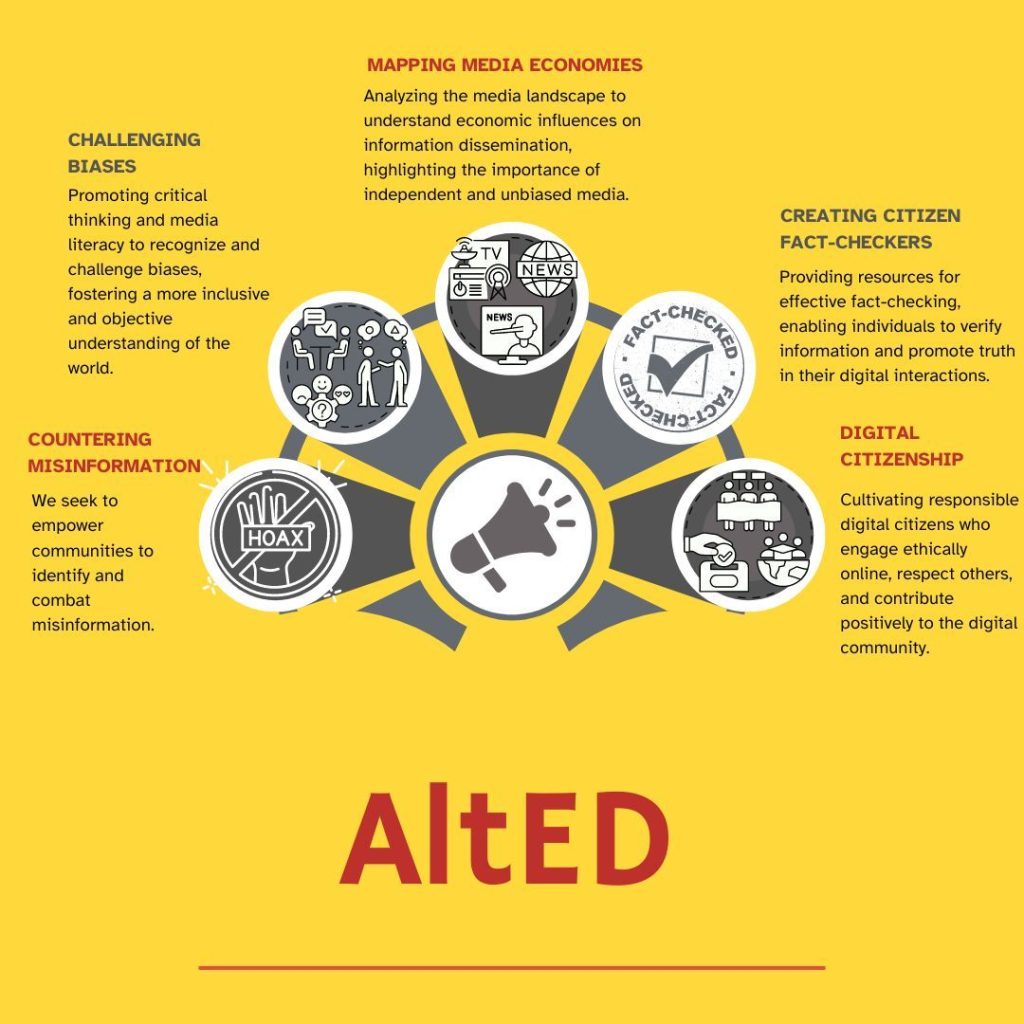
AltED’s mission is to make Media and Information Literacy programs accessible to all, particularly young adults and children, empowering them as informed citizens. We aim to achieve this by:
- Capacitating educators in public schools and communities,
- Building capacities of Civil Society Organizations (CSOs) to decentralize teaching-learning practices around media and information literacy.
IMPACT
Learning Outcome
The assessment was conducted with 170 students. We observed that 95% of students were proficient in identifying fraudulent sources of misinformation after the programme was over.
Pedagogy
85% of students reported that they were free of fear and felt confident to ask questions during the programme.
Anecdotes
My mother told me to stay away from my Muslim friends because of what she keeps seeing on the TV. I explained to her that this is a bias that the media keeps spreading because they make money from it. There is no difference between me and my Muslim friends.
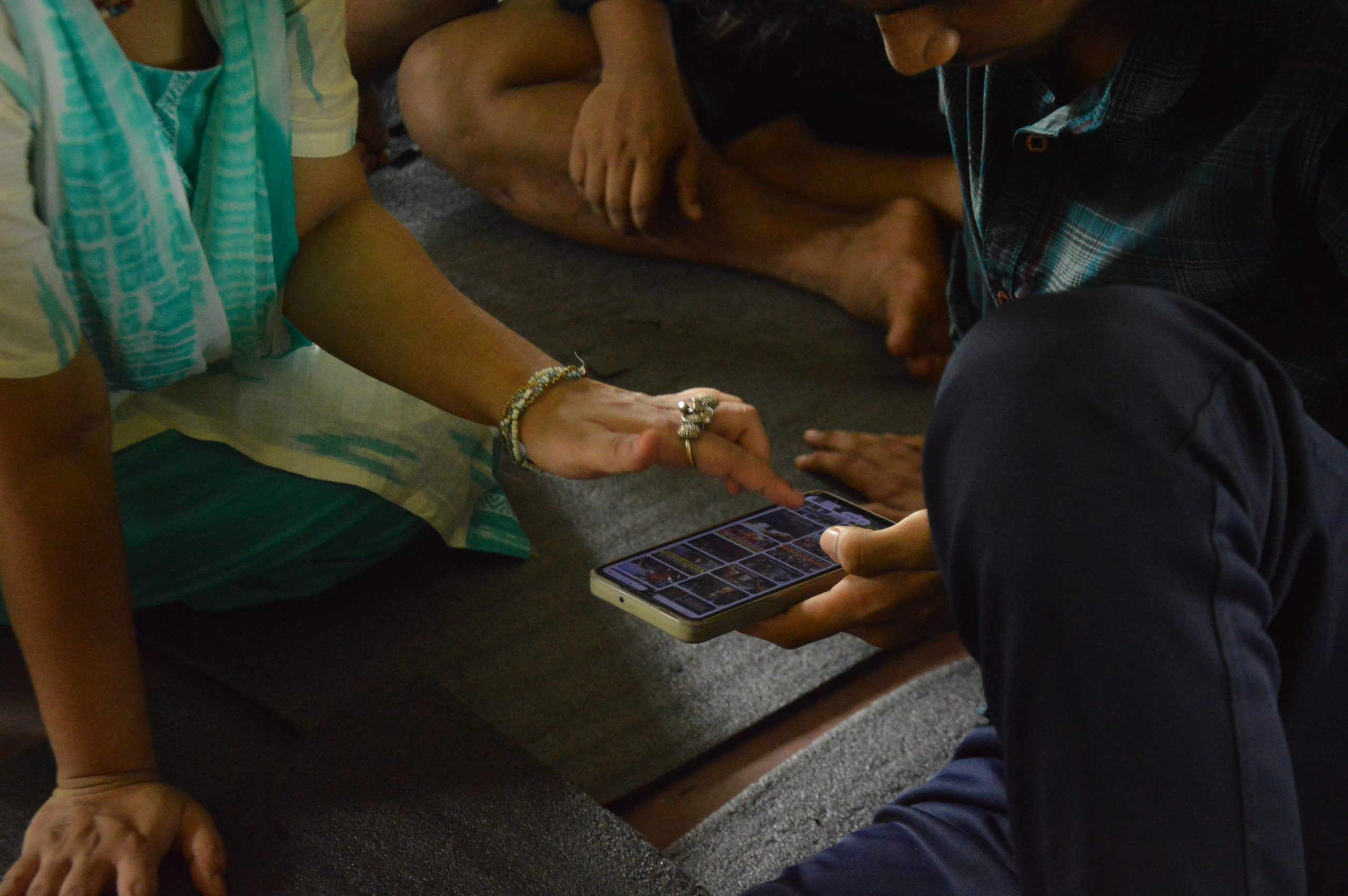
We saw a WhatsApp message claiming that the British gave the name INDIA in Aug ‘47 and it stands for ‘Independent Nation Declared In August’. Before, we’ve read in history that the English East India Company was founded back in 1610. How did they have the word ‘India’ in their name in 1610, if INDIA was coined in 1947?
PARTNER ORGANIZATIONS
- School Programmes
- Civil Society Organizations
◉ Uluberia Koijuri Vipyapith, West Bengal
◉ Ramkrishna Mission School, Narendrapur
◉ Batanagar Boys High School, West Bengal
◉ Community Learning Centre programme, Kolkata
◉ Nafarchandra Balia Balika Vidyapith, Kolkata
◉ Naihati Pallimangal Vidyapith, West Bengal
◉ Ektara School, Kolkata
◉ Tollygunj Sodepur Srimanta Vidyapeeth, Kolkata
◉ Jan Jagaran Shakti Sangathan
◉ Pashchimbanga Khet Majdoor Samity.
◉ School For Democracy.
◉ Sambhaavna Institute of Public Policy and Politics.
◉ Karta Initiative.
THE PROGRAMME
AltED has developed a 10-hour curriculum for students in grades 6, 7, and 8, typically spread over 15 classes of 40 minutes each. This curriculum is completed over 40 days in one school, usually with three classes each week.
Two teachers are assigned with AltED. They attend the classes, and become co-facilitators with AltED educators by the end of the program.
Apart from the school program, AltED has developed a 30 hours engagement in two levels with educators and civil society members. This workshop is implemented over 7 to 10 days and two levels. The participants are sufficiently ready to become facilitators for media and information literacy by the end of the level two workshop.
Curriculum: Pedagogy
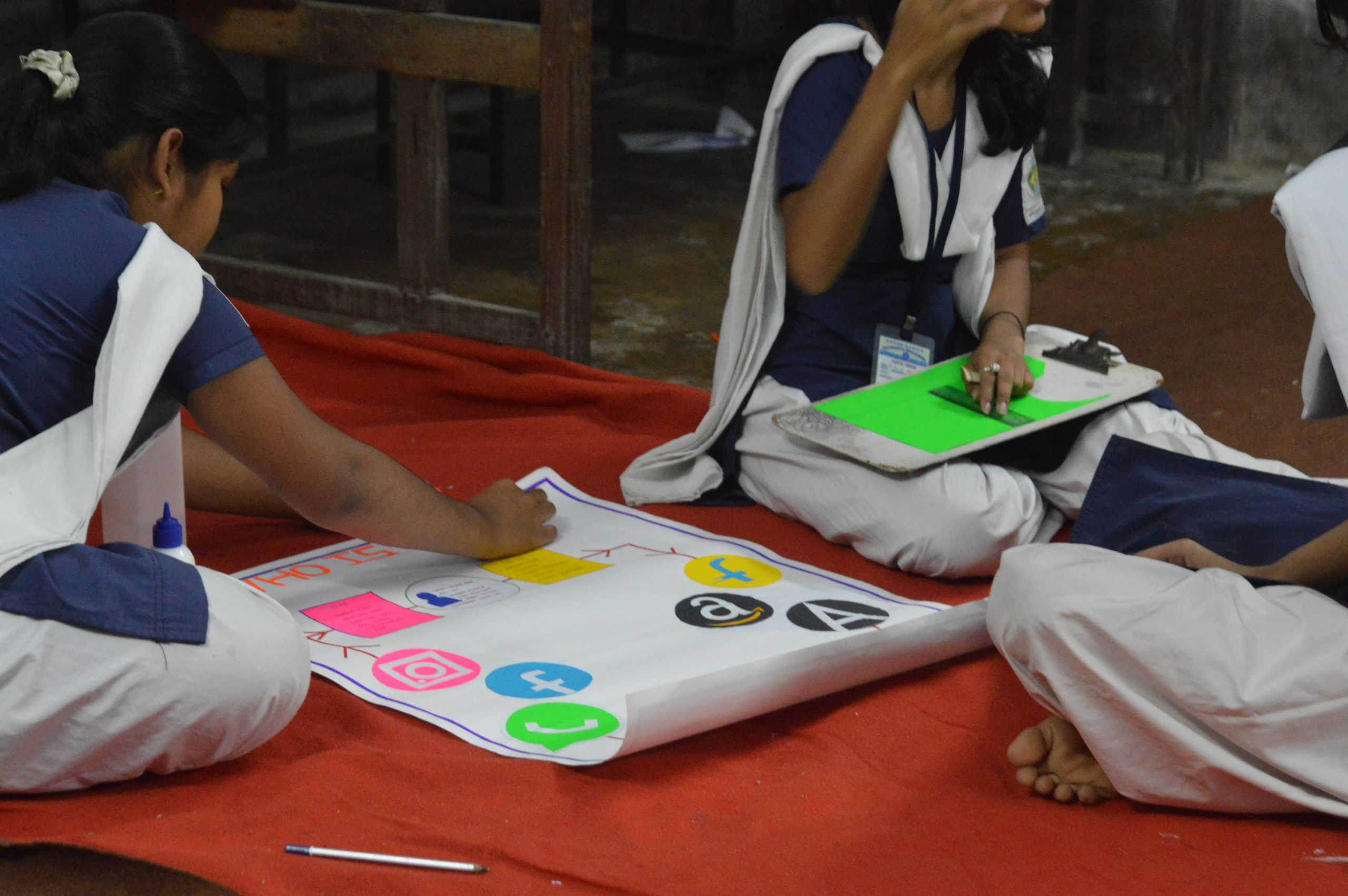
Activity-Based Learning: All our curricula for students, teachers, and young adults are entirely activity-based, extensively gamified, and tailored to the learner’s context.
Project-Based Learning: Participants engage in multiple micro-projects and one group macro-project. They apply the lessons learned from the micro-projects to the macro-project, which aids in understanding key concepts.
Act-Reflect-Consolidate: The programme concludes with a consolidation event where students organise an exhibition to showcase their projects and share their learning with peers, teachers, and the community. This consolidation process is crucial for reinforcing and internalising their learning.
Curriculum: Content
- Perceiving information: Developing the ability to process information and form viewpoints while recognizing and negotiating personal biases.
- Emotion and persuasion: Understanding how information persuades us and triggers emotional reactions.
- News, newsworthiness, and sources: Exploring how media sets narratives by determining the relevance of events and their impact on people and the environment. Emphasising the importance of seeking and verifying sources to accurately decode these narratives.
The Business of Media: Examining how media platforms capture our attention to generate revenue, with advertisers as the primary source of income for media companies.
Our curriculum subscribes to the MLJP (Meaning, Learning, Joy, Pride) principle.
Programmes (2024 – 25)
| Light House Schools | Media Literate Civil Society | Spaces |
|---|---|---|
| 🏫 | 📚 | ⭗ |
| Creating 35+ schools with robust practices in Media & Information Literacy through our programme reach-out | Working with 20+ CSOs to inculcate Media Literacy in their programmes through Co-Lab | Creating 5 Community Learning Centres through our programme Spaces, holding learning spaces for Young Adults. |
Through these programmes, we shall be impacting 10,000+ individuals.
THE TEAM
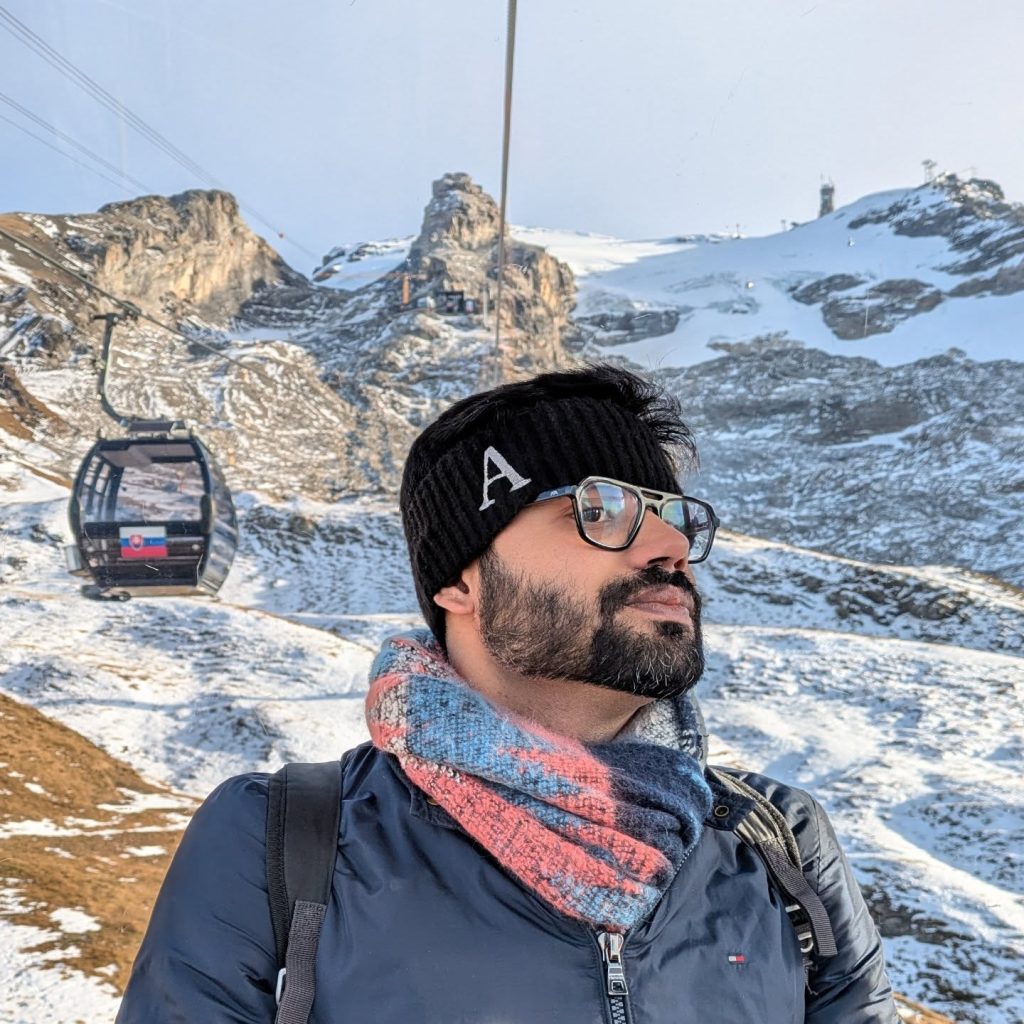
Anish Mukherjee, Director
Anish has 14 years of experience in the education sector as an entrepreneur, curriculum developer, and fundraiser. Anish has a postgraduate degree in economics. His focus area is to lead the operation, the curriculum team, curating partnerships, and contributing to strategic initiatives. He is a recipient of the Founders Fellowship (Wipro Foundation), a graduate of the Gandhi Fellowship, and a winner of the IDEO reimagining education challenge, 2020.
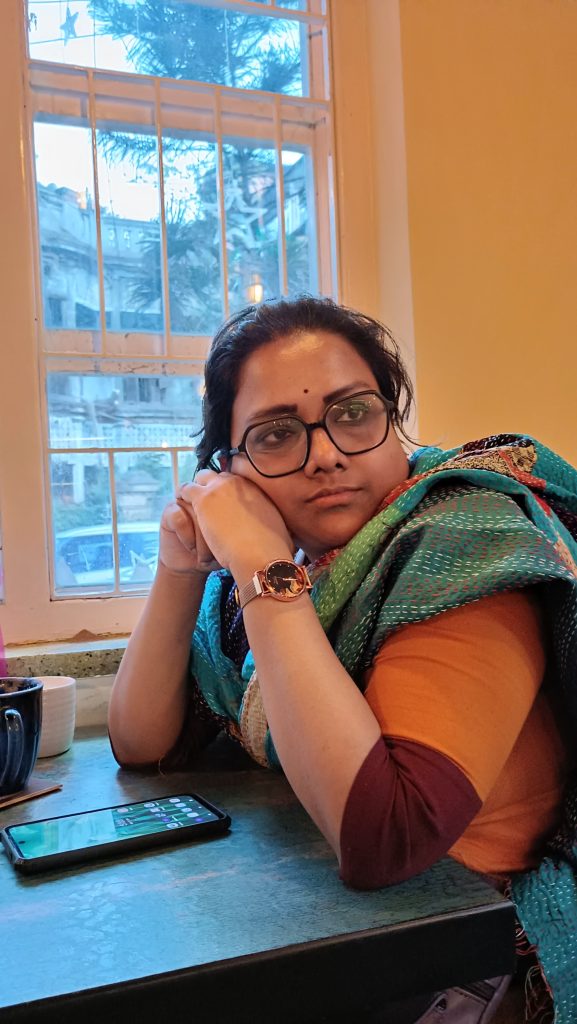
Mahaprajna Nayak, Senior Programme Manager (Curriculum)
Her interests are multidisciplinary, ranging from education, pedagogy, childhood geographies and media studies. She has a Masters in English and a PG Diploma in Community Media. She has previously worked as an editor in publishing and news media, taught ESL, and been an academic researcher. Her focus area is curriculum development at AltEd.
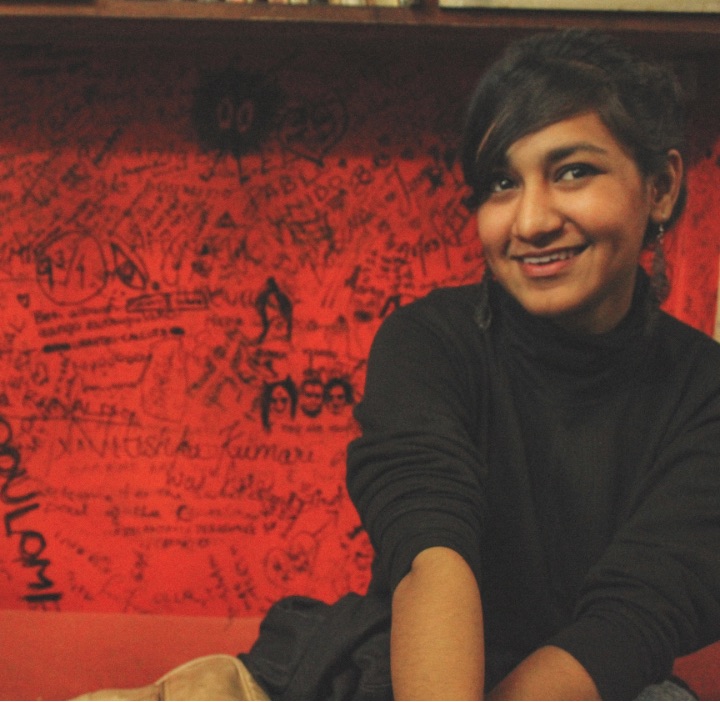
Elia Jameel, Head of Implementation
Elia holds a postgraduate degree in modern history and a bachelor’s degree in Education. She has seven years of teaching experience, where she focused on history and social sciences. Her pedagogical interests involve integrating social sciences and 21st-century life skills. In AltED, she aims to employ innovative strategies to connect with students and educators.
Purba Rudra, Programme Manager (Knowledge Building)
Purba has more than 13 years of experience in the education and social sector, teaching and mentoring students in an inclusive set up. She completed her doctoral degree from Rutgers University, New Jersey. She has previously worked as the Academic Director at an organization working in the field of inclusive living and education among girl children. She has also been involved in various research and documentation initiatives. Her focus at AltED is in expanding the knowledge base of the MIL curriculum.